Oca Villamiel
Born in 1953, Manila, Philippines
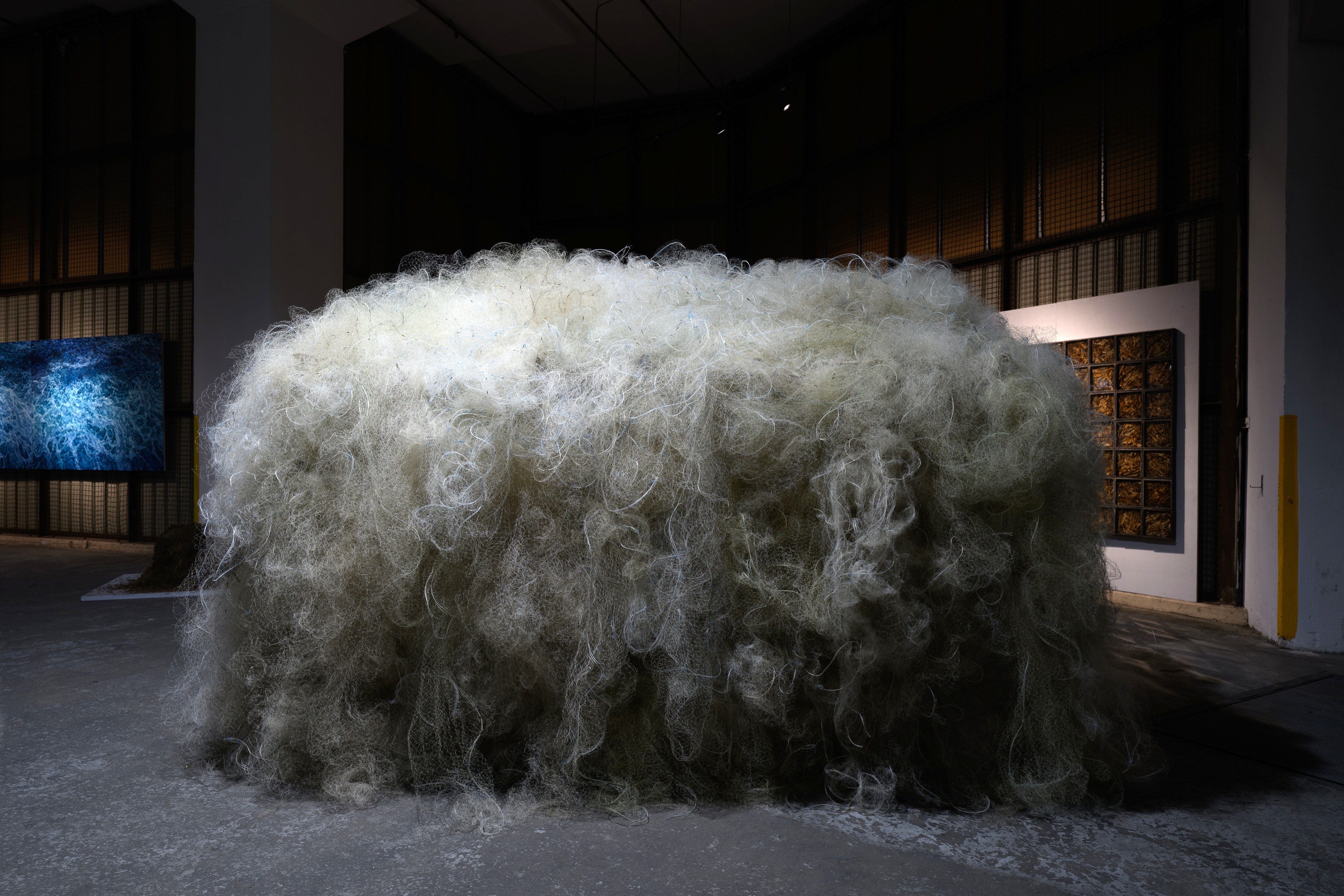
Oca Villamiel (b. 1953 Philippines)
Bahay ng Mangingisda
2025 Discarded nylon fish nets 152 x 213 x 152 cm
Oca Villamiel confronts the precarious conditions of life in his hometown of Barangay Caridad, Atimonan, a fishing community marked by poverty and hardship. Bahay ng Mangingisda recreates the scale of a fisherman’s hut from an immense mound of nylon fishnets. Implements for entrapment take the form of protective shelter, conjuring the tension between fragile refuge and the burden of scarcity.
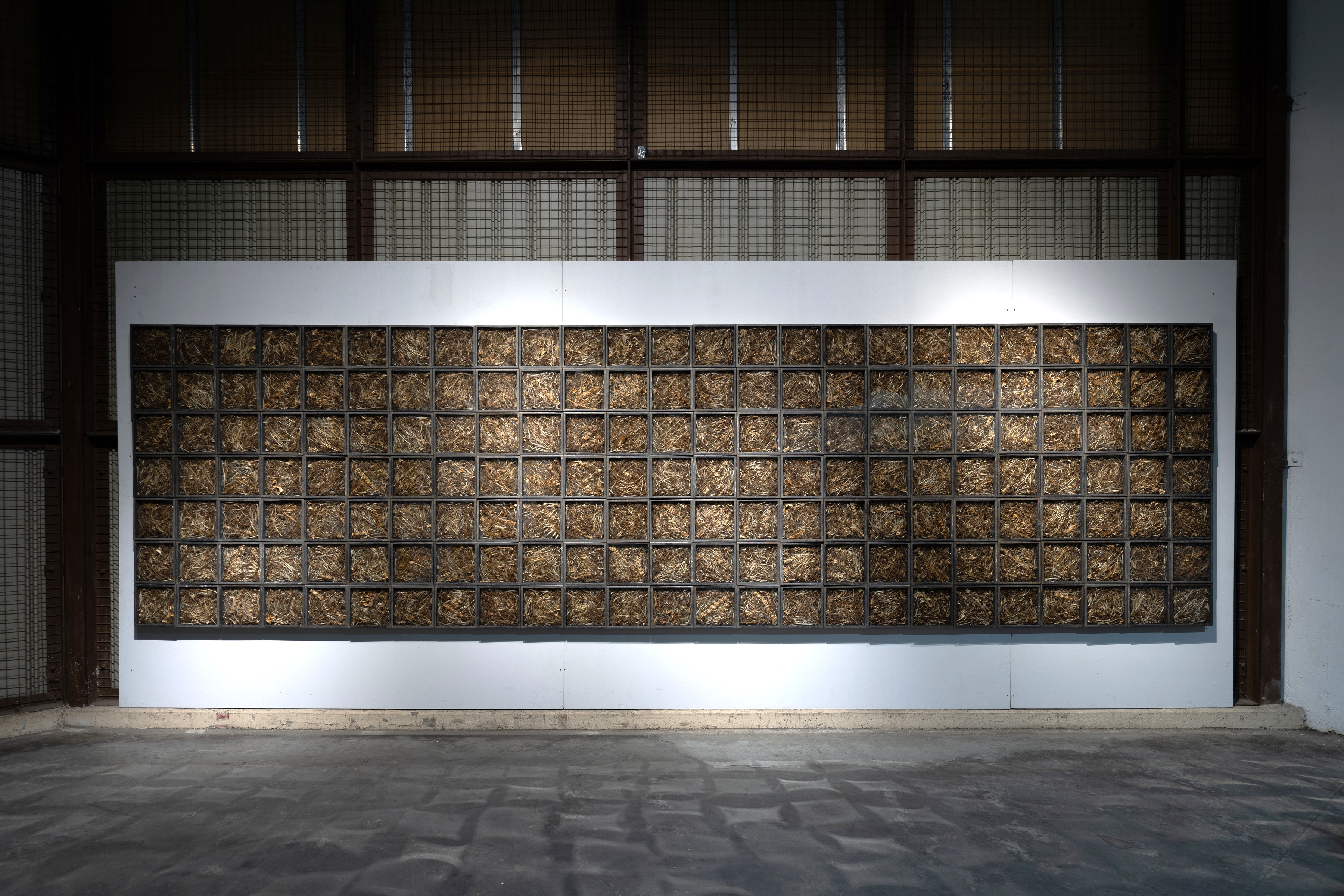
Oca Villamiel (b. 1953 Philippines)
Traces
2022 685.8 x 137.16 cm
Fishbone & mixed media framed
Oca Villamiel’s Traces is a haunting collection of 180 framed pieces made entirely of fish bones. On first encounter, the works appear delicate, almost ornamental, but their quiet arrangement carries the weight of lives marked by struggle. Each bone is a fragment of survival, a trace of scarcity. The series speaks to the persistence of poverty: even when the fish is gone, its skeleton remains, reminding us of hunger that has not disappeared.
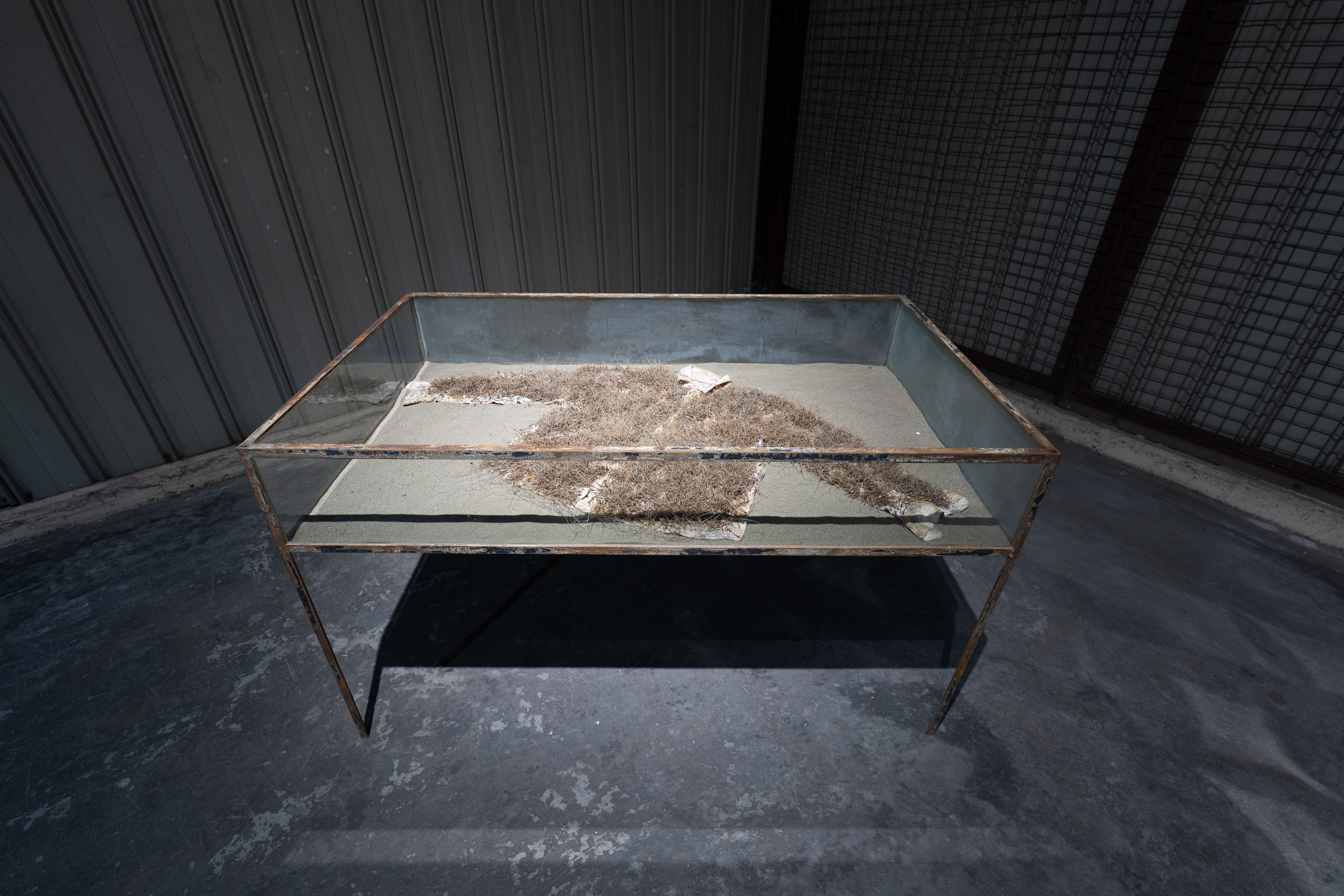
Oca Villamiel (b. 1953 Philippines)
Portrait
2025
Old clothing, discarded fish hooks
81 x 122 cm
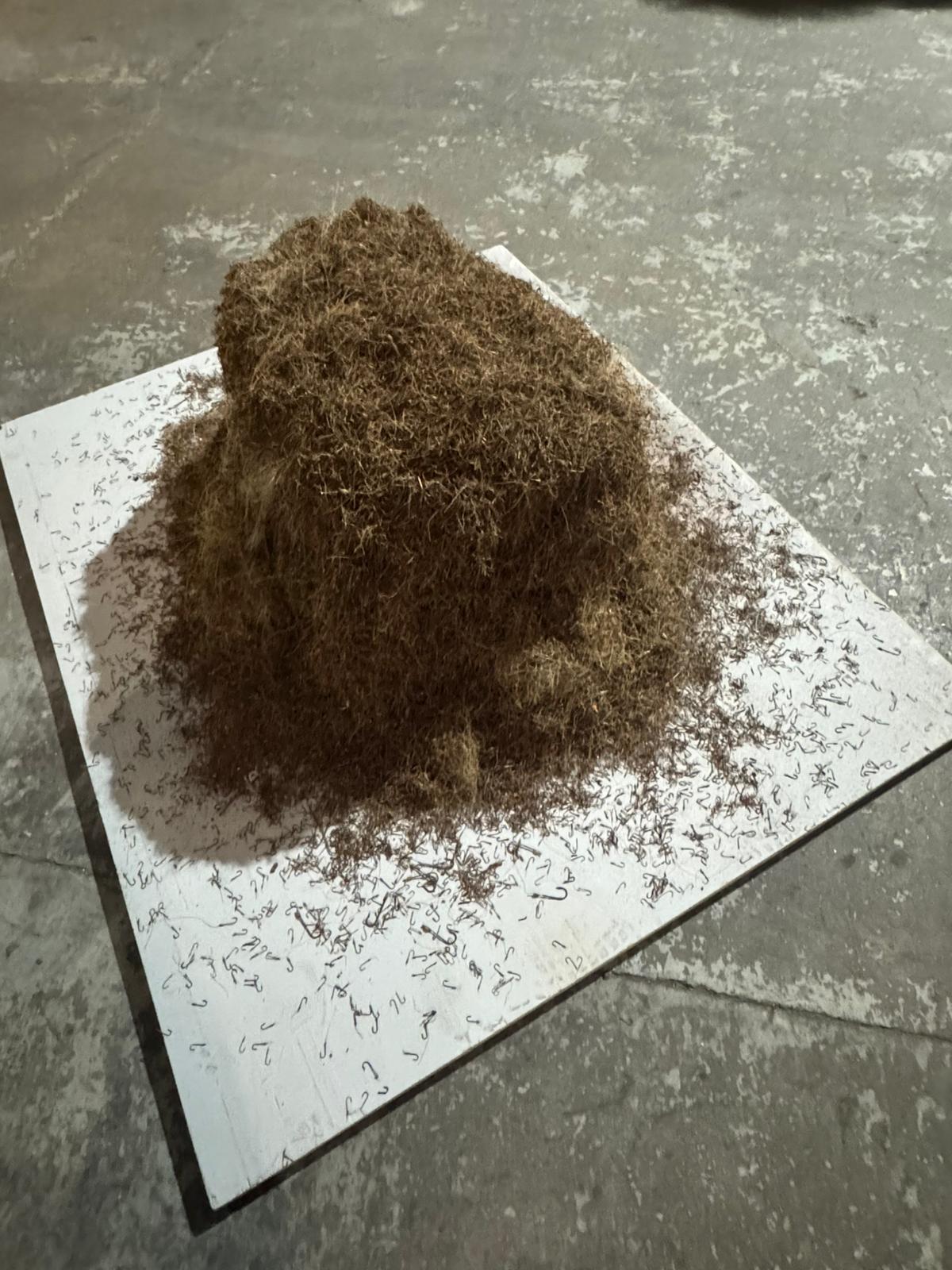
Oca Villamiel (b. 1953 Philippines)
Buhay ng mangingisda (Life of a fisherman)
2025
Discarded fish hooks
46 x 61 cm
Pete Jimenez
Born in 1960, Philippines
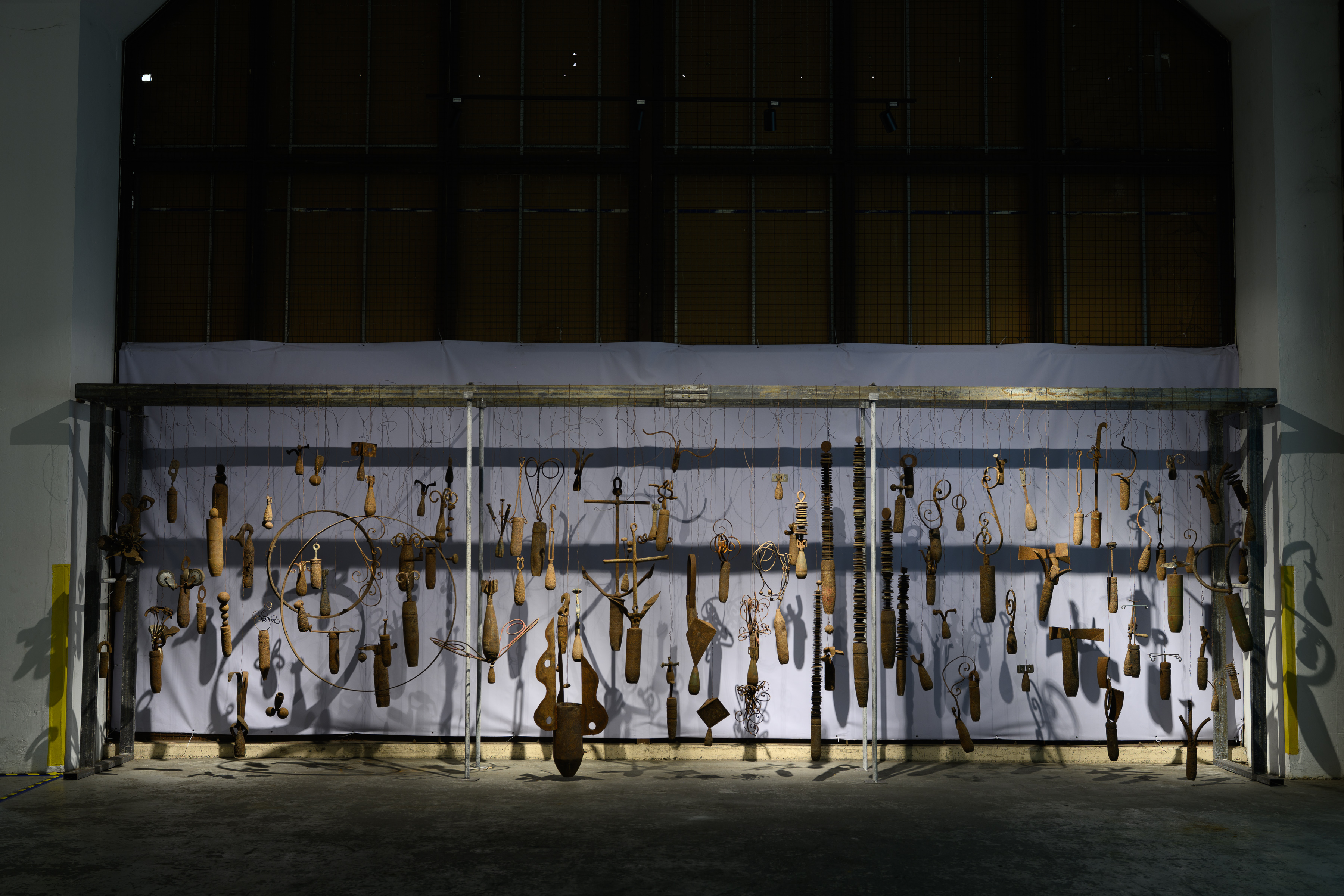
Pete Jimenez (b. 1960 Philippines)
Hard Rain, 2025
Recycled steel and various metal components derived from historical ordnance,
cleaned and rendered for artistic display.
Total 110 pieces, installation 14m length
@ Drawing room Manila
Hard Rain is an installation composed of more than a hundred rusted steel scrap components sourced from decommissioned twentieth-century industrial artifacts. These inert reclaimed steel casings were collected over a decade from Nueva Vizcaya and the Ifugao Province in the Philippines. Local villagers unearthed discarded steel fragments and dismantled vessel parts from long-abandoned scrap sites, selling them to antique pickers for modest earnings that often helped meet daily needs.
Through this work, the artist transforms overlooked material remnants into a contemplative sculptural field-a landscape where accumulated histories are reconfigured into gestures of resilience and renewal. Once utilitarian objects are reassembled into a quiet spatial composition, allowing material memory to surface through acts of gathering, transformation, and making.
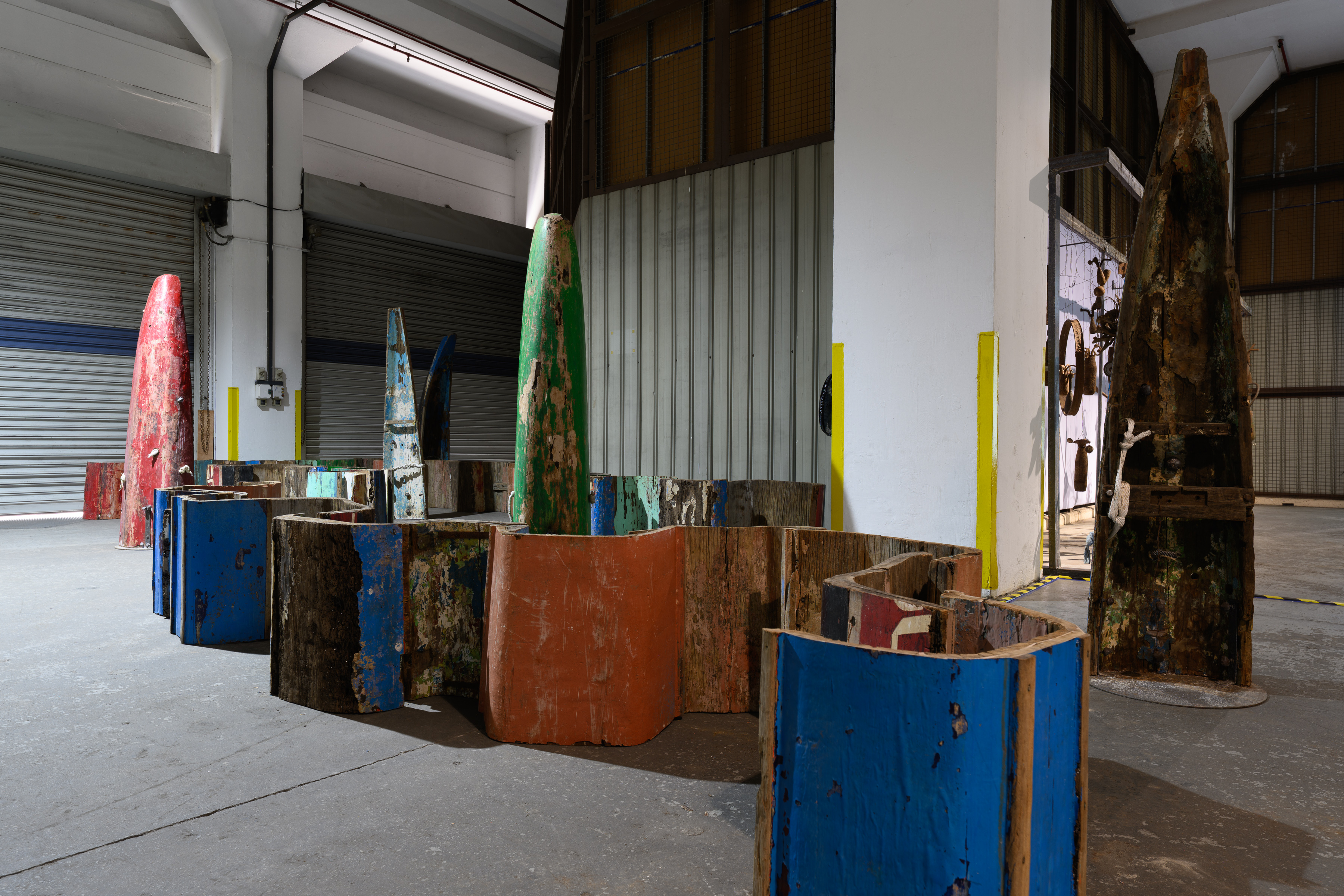
Pete Jimenez (b. 1960 Philippines)
TALL ORDER
2025 Wood and steel, 229 x 61 x 61 cm
Pete Jimenez transforms canoe-like dugouts of Bulakeño fisherfolk
into monumental forms in TALL ORDER. Through these weathered
vessels, he reflects on our deep reliance on water-both gift and
trial-while evoking struggles of survival, adaptability, and co
existence. The work also gestures toward tensions in disputed
waters, where human resilience confronts poverty, conflict, and the
will to endure.
Jimenez’s boats are not pristine relics but weathered, chipped, and
blistered vessels, their surfaces bearing scars of use and decay. He
sources them from fishing villages in Bulacan and Pampanga,
cutting and recomposing fragments into towering
sculptures that hover between memory and myth. In this
reconfiguration, each dugout becomes a symbolic locus-anchored in
community traditions of riverine life yet reaching into broader
narratives of territorial claim, ecological precarity, and the invisible
currents that bind people to place. His practice, rooted in repurposed
industrial and maritime detritus, underscores how cultural resilience
emerges from the margins and margins of circulation.
Alfredo & Isabel Aquilizan
Born in 1962, Cagayan Valley, Philippines, 1965, Manila, Philippines
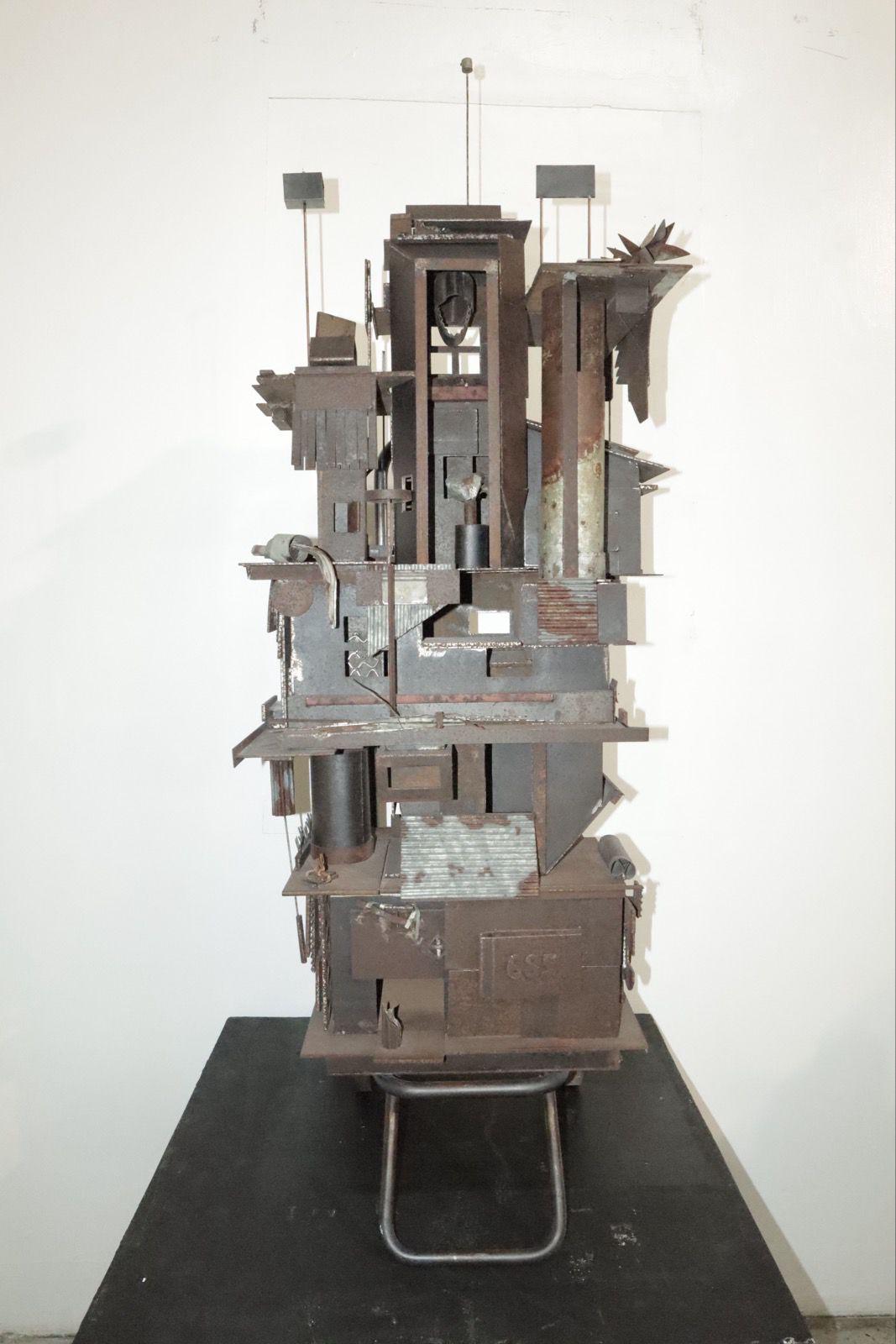
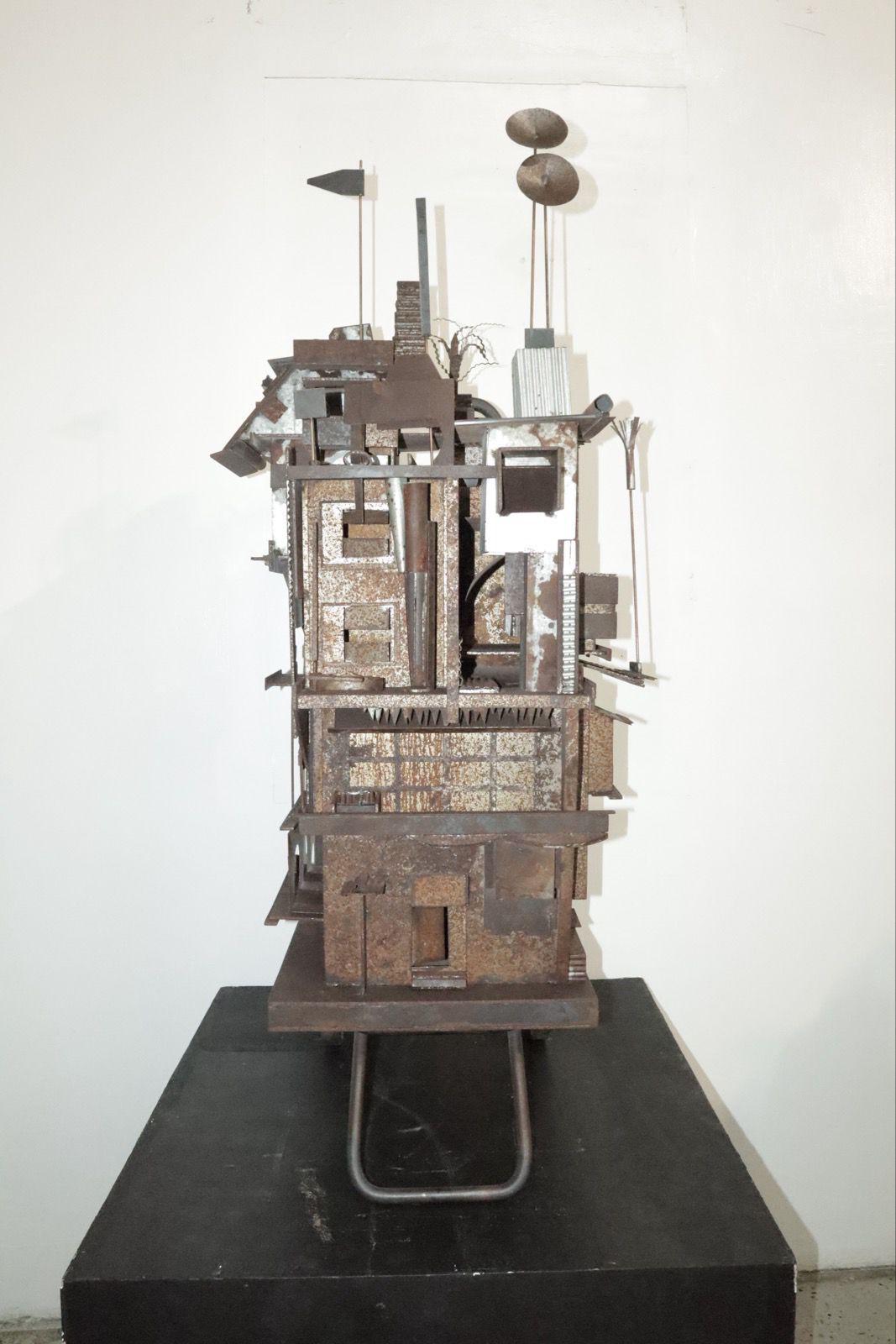

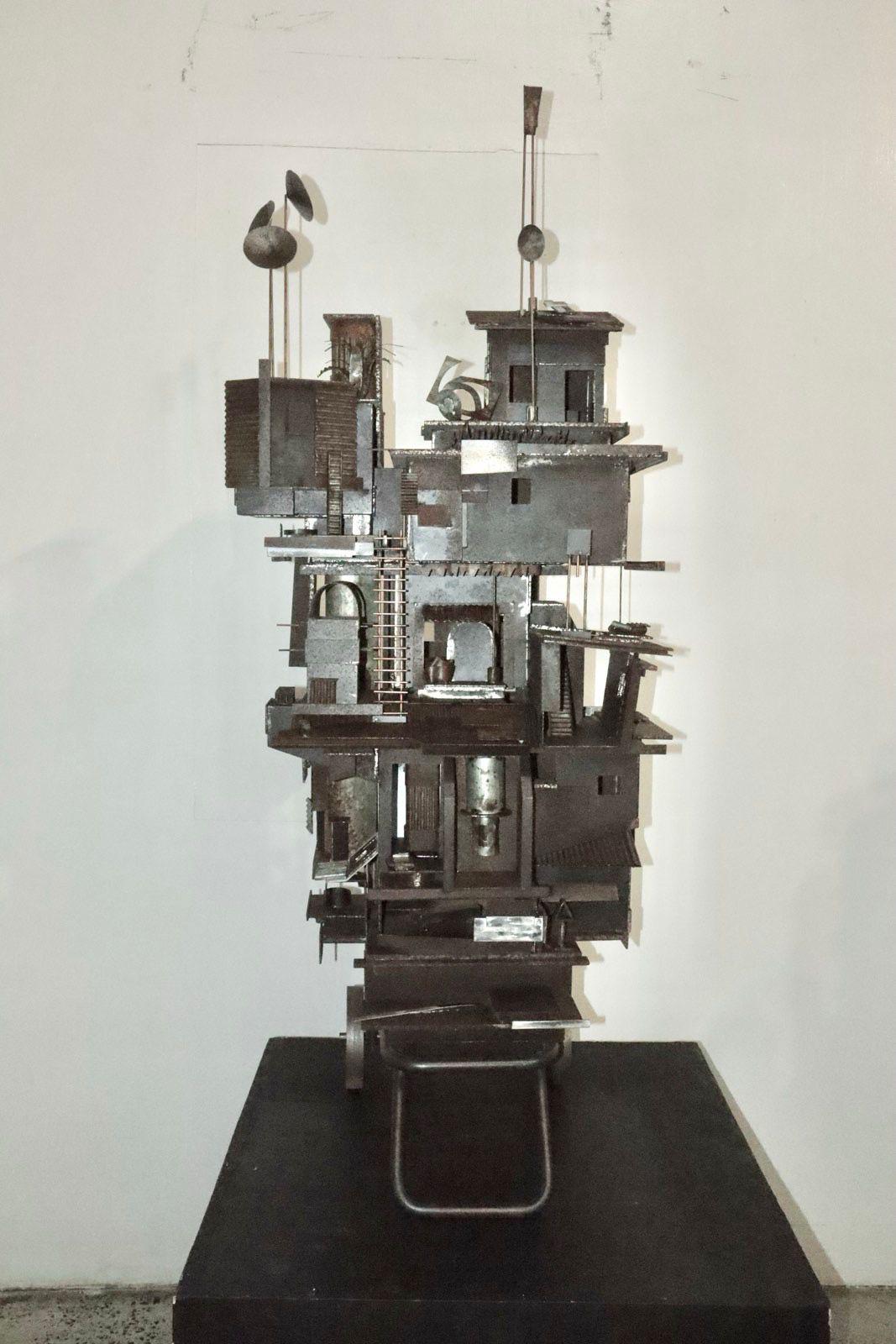

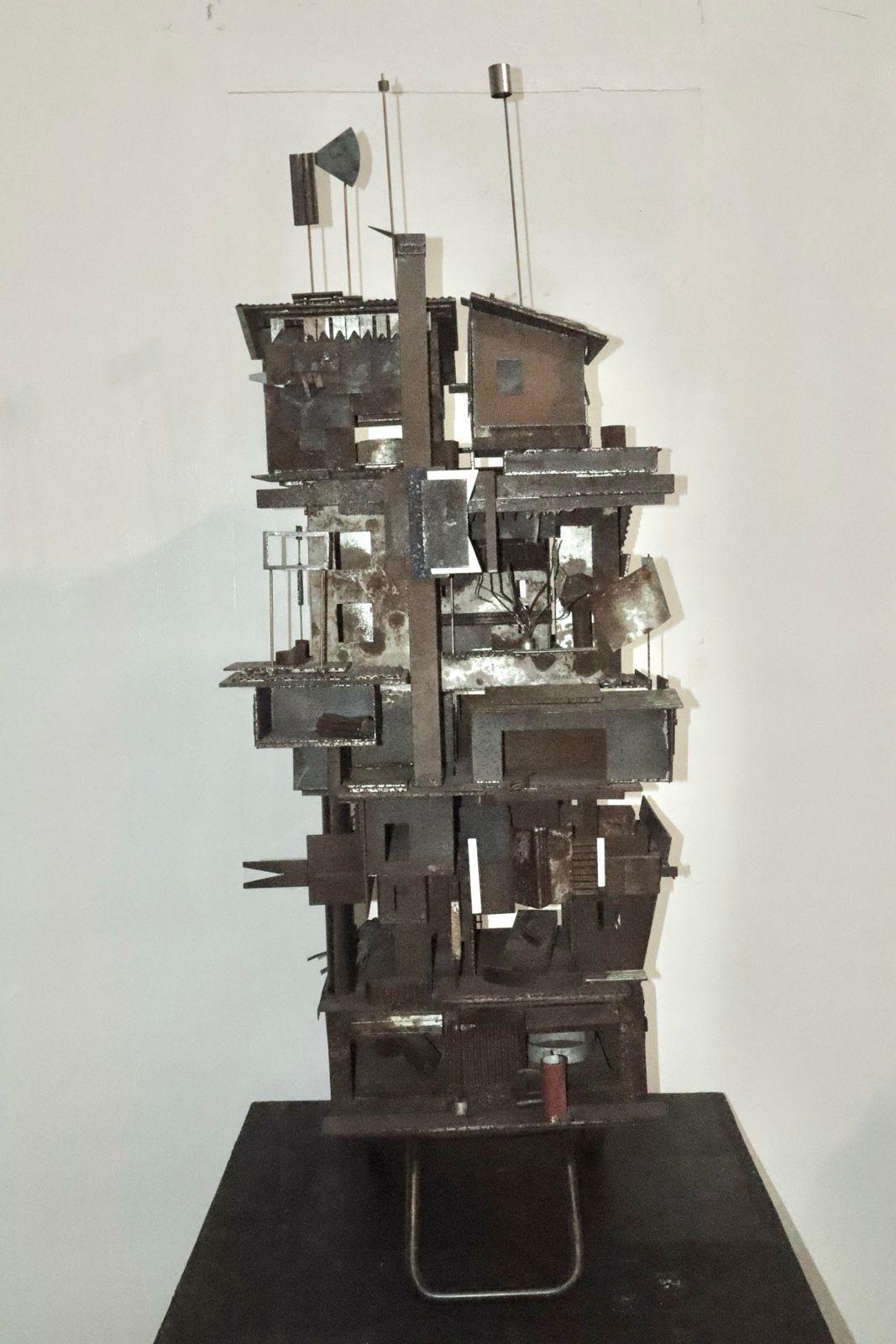
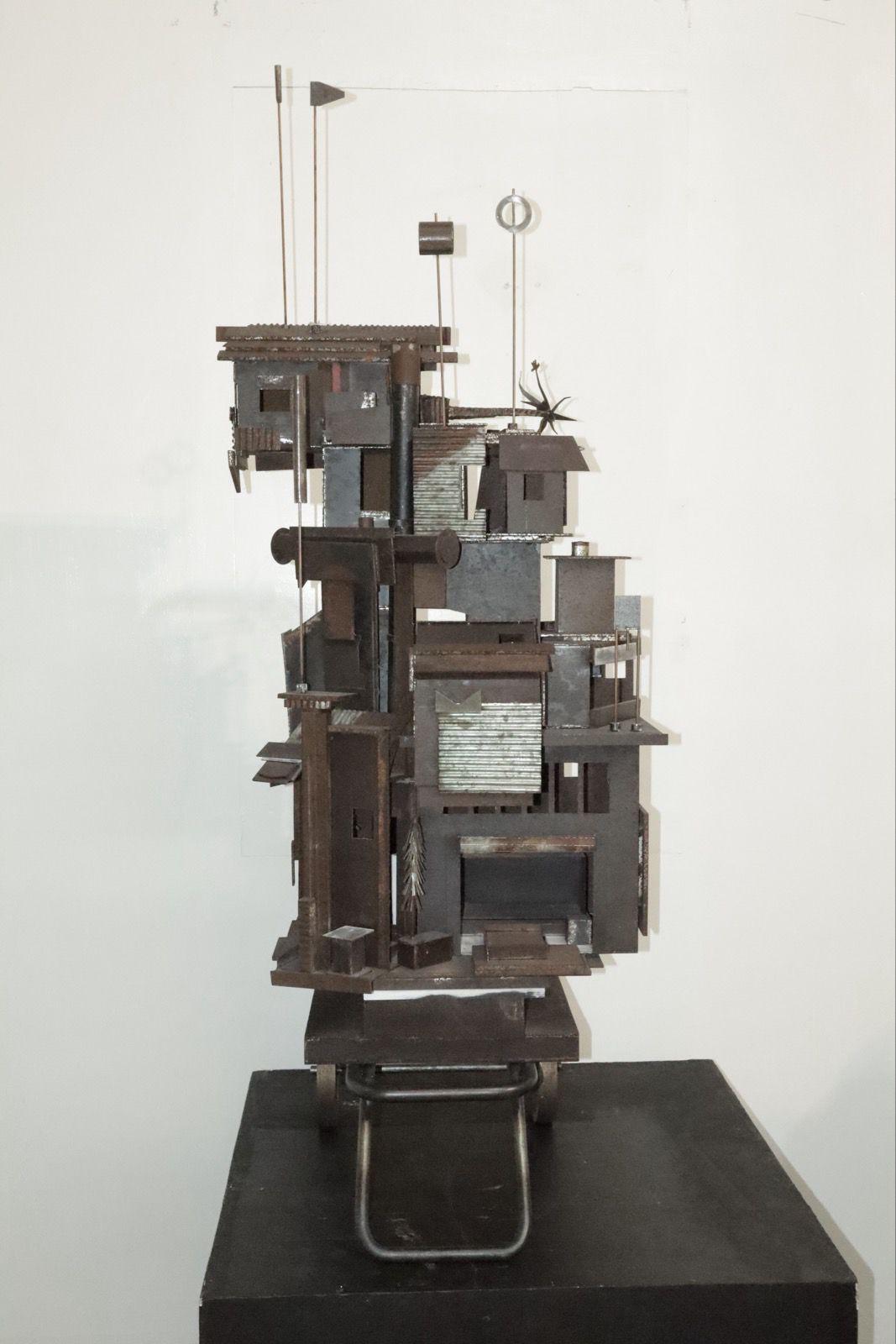
Alfredo & Isabel Aquilizan (b. 1962, b. 1965 Philippines)
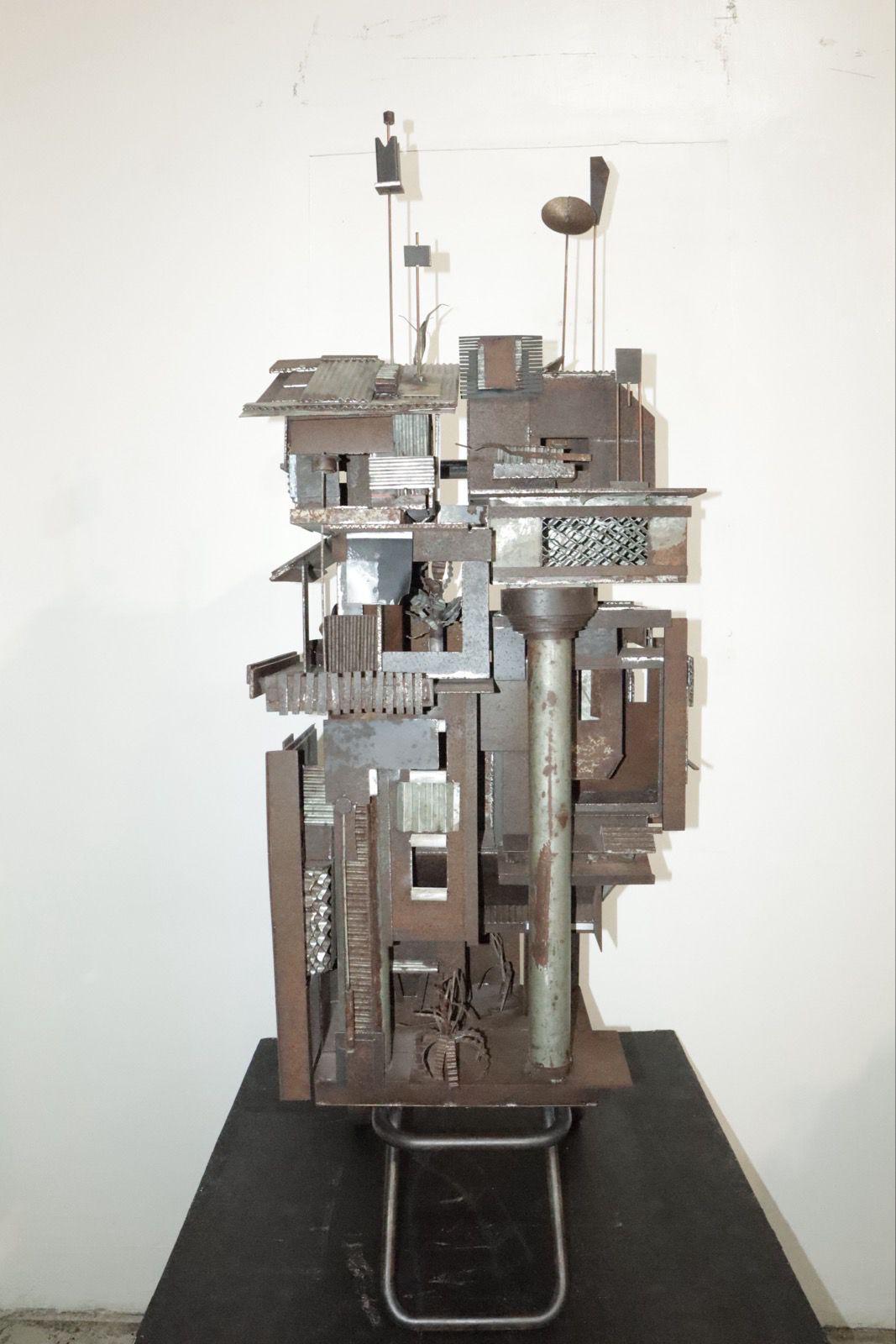
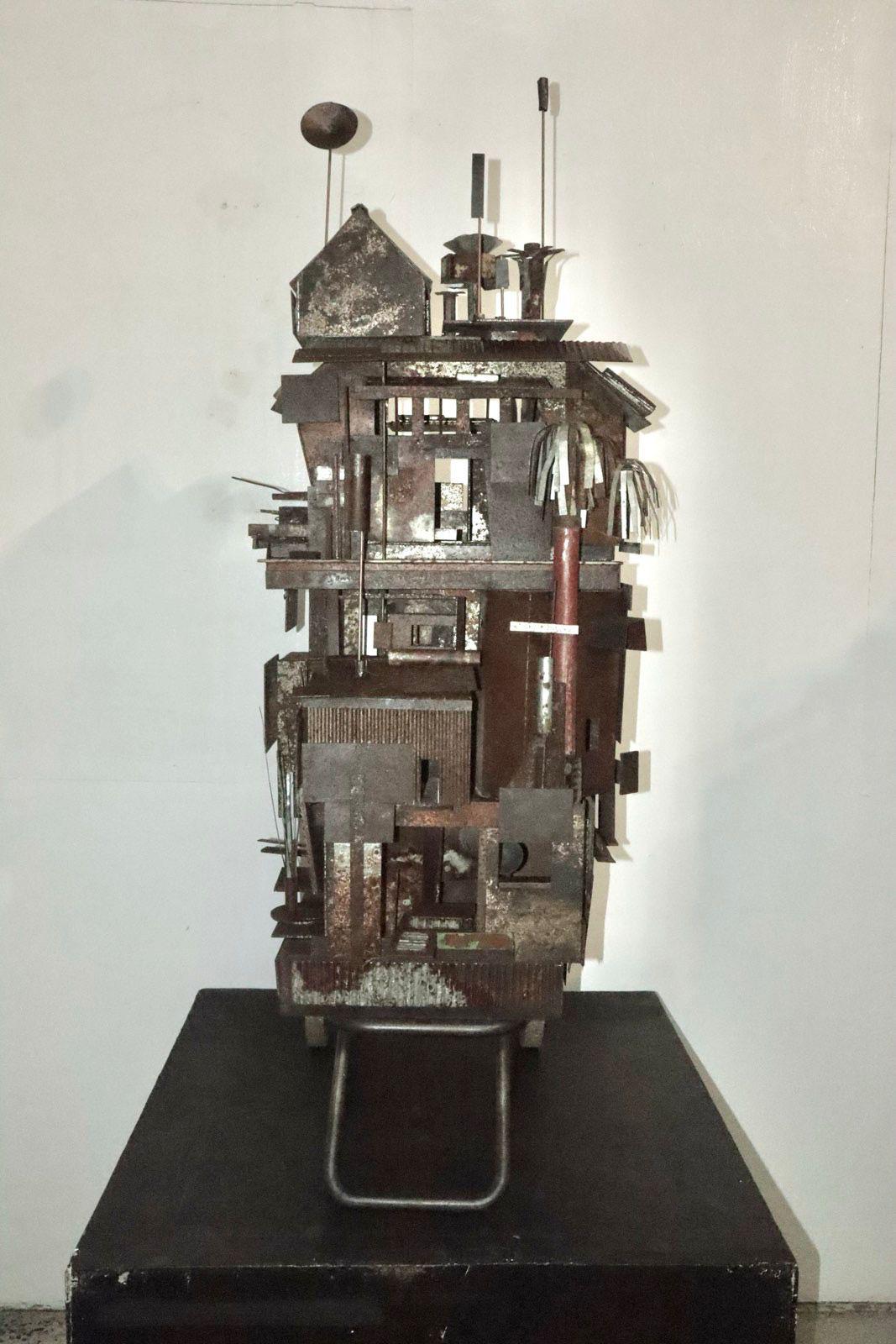
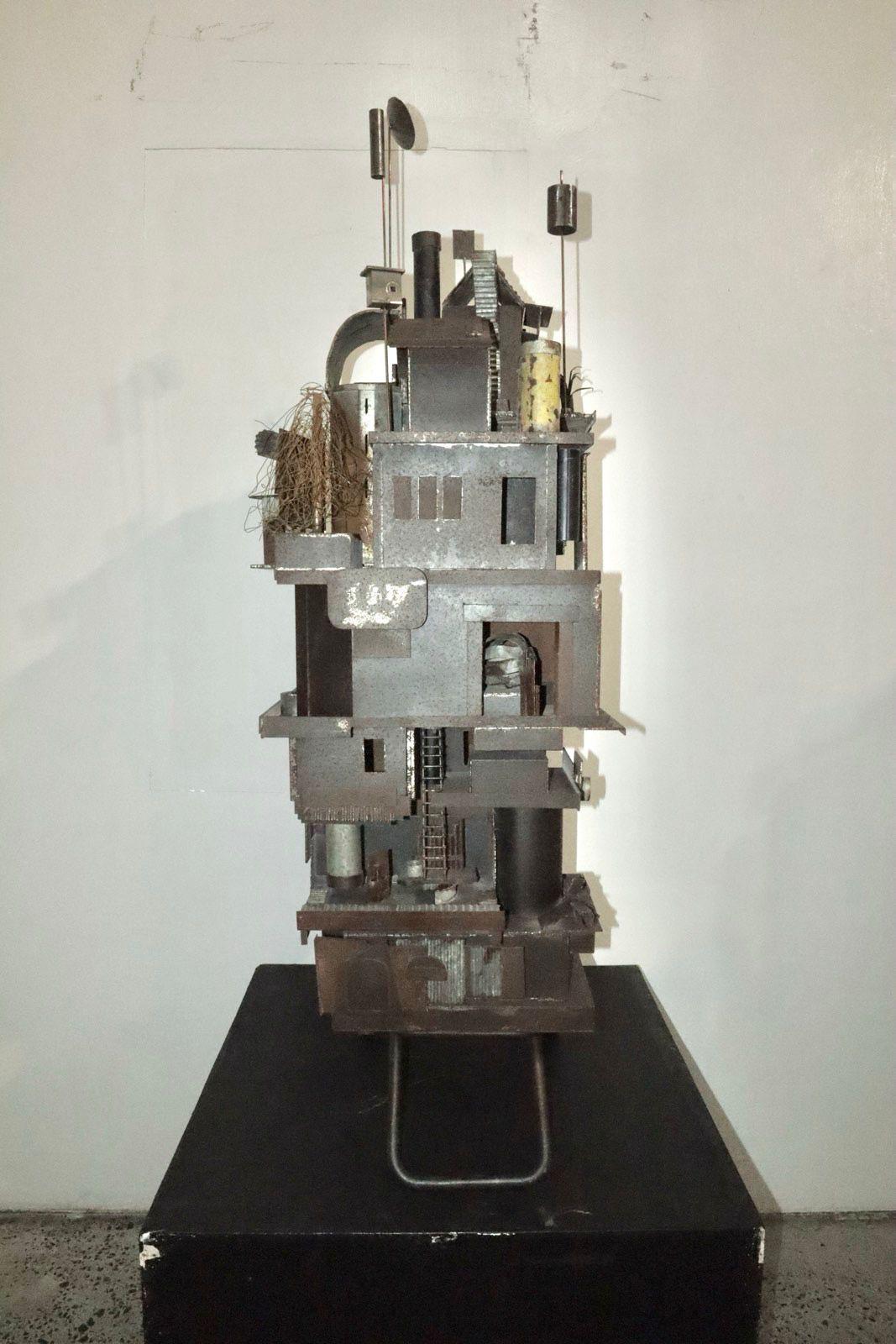
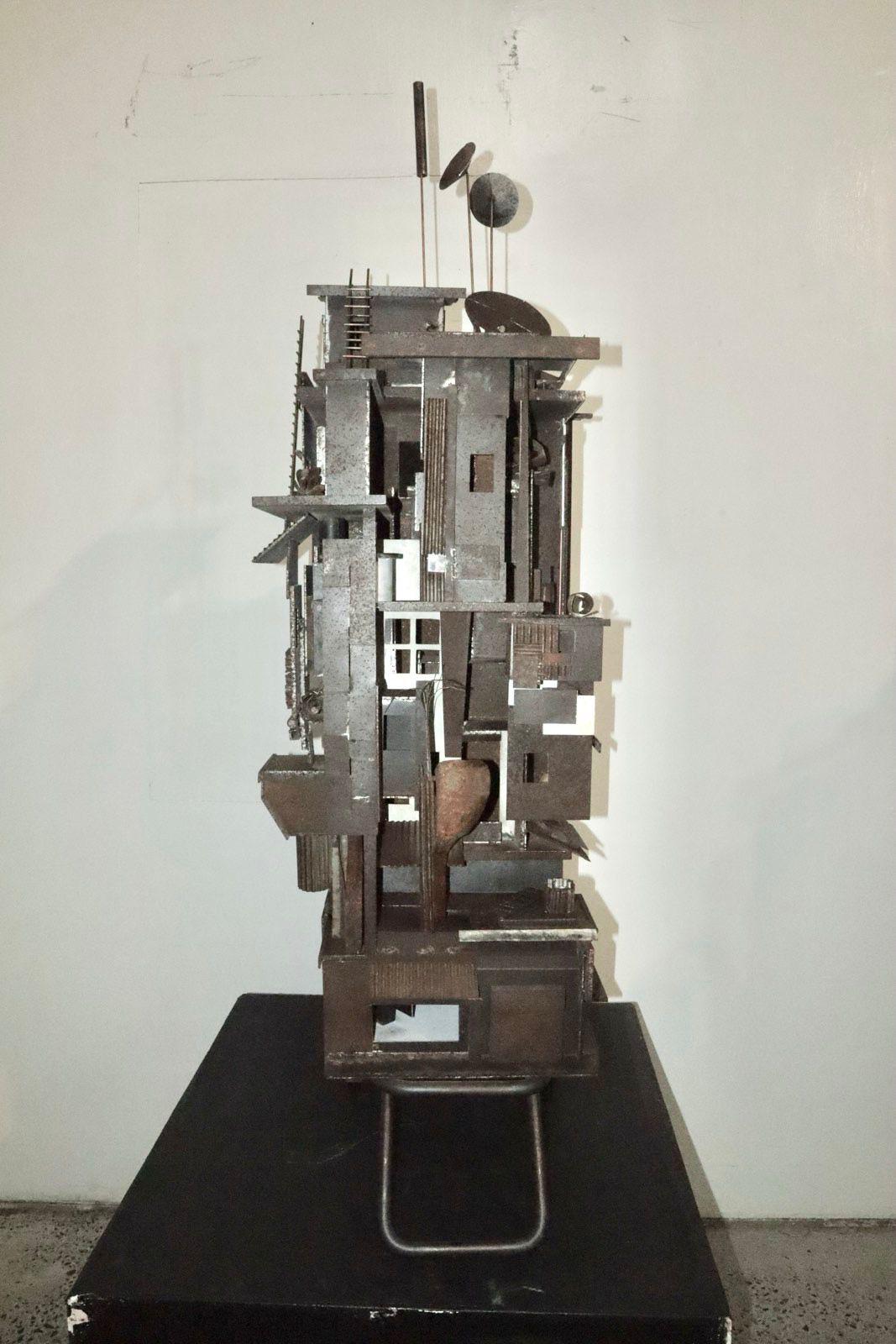
Arrivals and Departures: Project Another Country
2019-2025 Raw metal 100 x 40 cm (each)
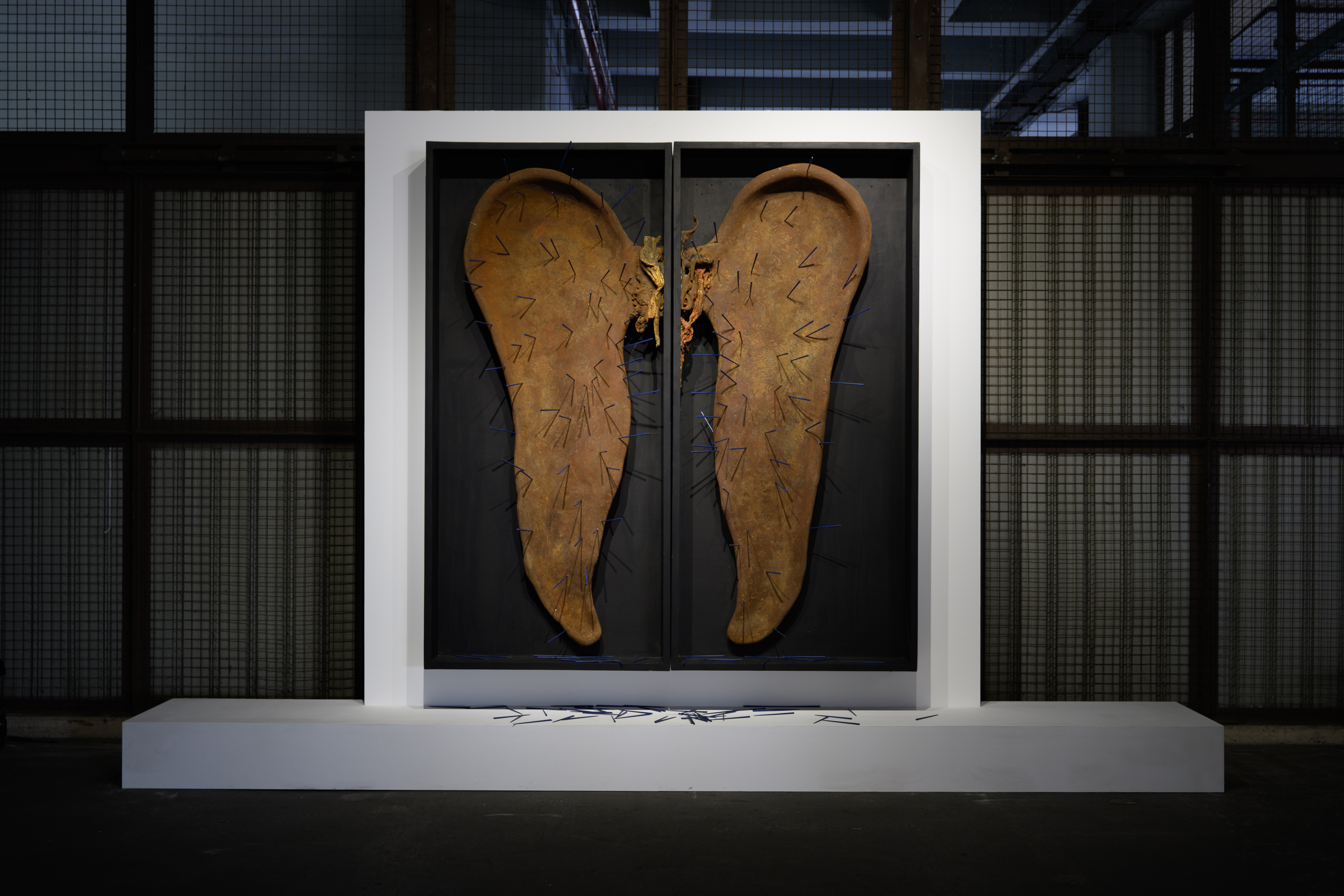
Alfredo & Isabel Aquilizan (b. 1962, b. 1965 Philippines)
Plight
2022 Polyester cast resin, acrylic and wood 249 x 232 x 25 cm
Continuing the artists’ engagement with Pandayan, the Filipino traditional practice of blacksmithing, the Aquilizans translate their iconic ephemeral cardboard boat and cityscape installations in the medium of metal. Plight is a pair of framed wings rendered in a rust finish, punctured and weighed down with sticks. The work explores the difficulties and the changes in transitory experiences in current times.
Elaine Navas
Born in 1964, Manila, Philippines
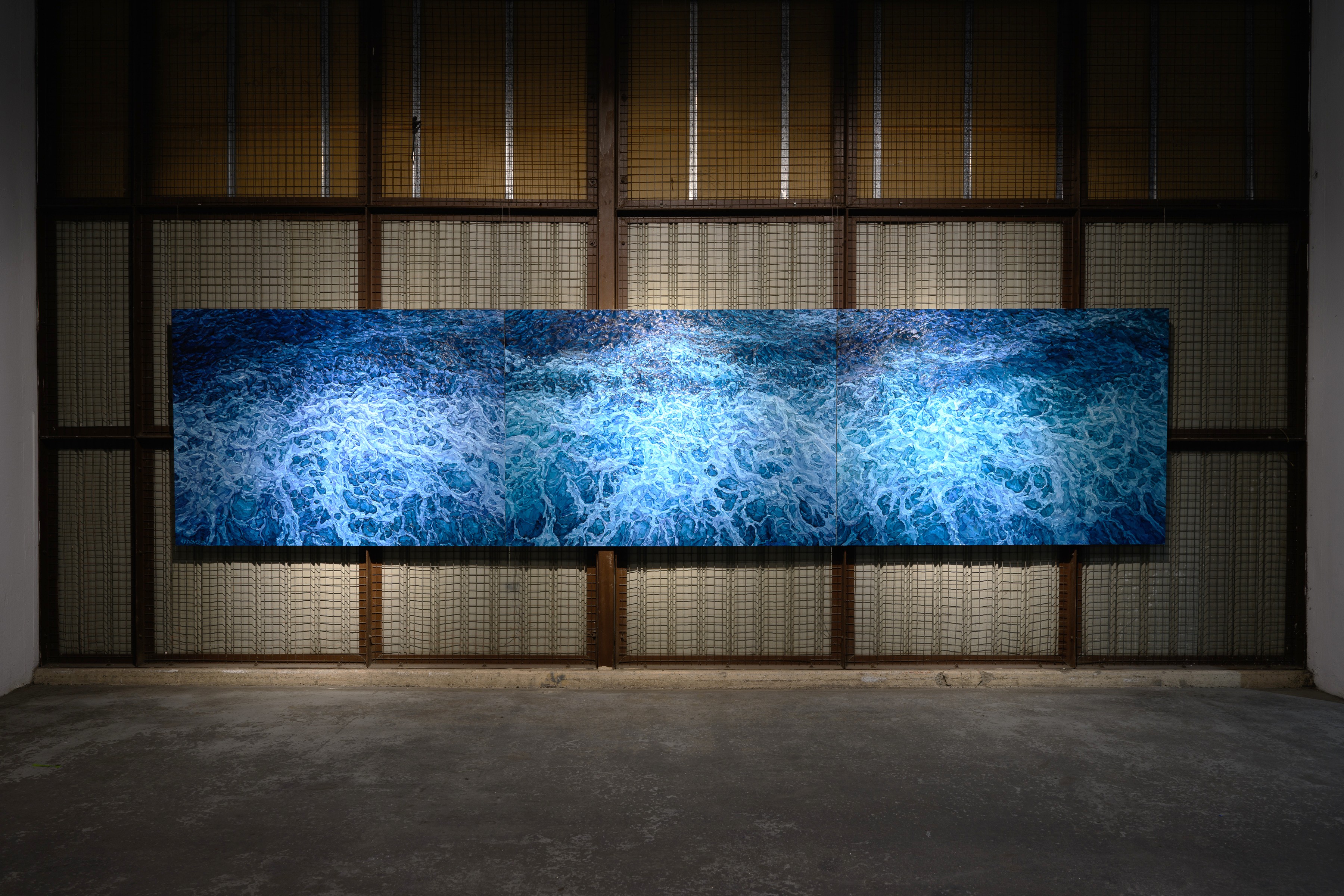
Elaine Navas (b. 1964 Philippines)
Nothing Moves Itself
2025
Oil on Canvas
152.4 x 640 cm (Triptych)
Elaine Navas’ series of paintings Nothing Moves Itself, inspired from a phrase by theologian Thomas Aquinas, and in dialogue with fellow artist Ling Quisumbing’s photographs, are contemplations on the idea of movement itself. The frozen moment of the sea is apparent in both photograph and painting, yet its motion is unmistakable, as Navas meticulously tries to capture the characteristics of each turn wave, each shift, each gradation to the next recurrence. Rendered in thick layers of paint which have become her signature, each painting becomes a frame from the idea of time-lapse which photography had brought into play. These recorded scenes are revealed to us as depictions of nature; while the transformation from photograph to canvas is a display of the artist's will.
Manuel Ocampo
Born in 1965, Quezon City, Philippines
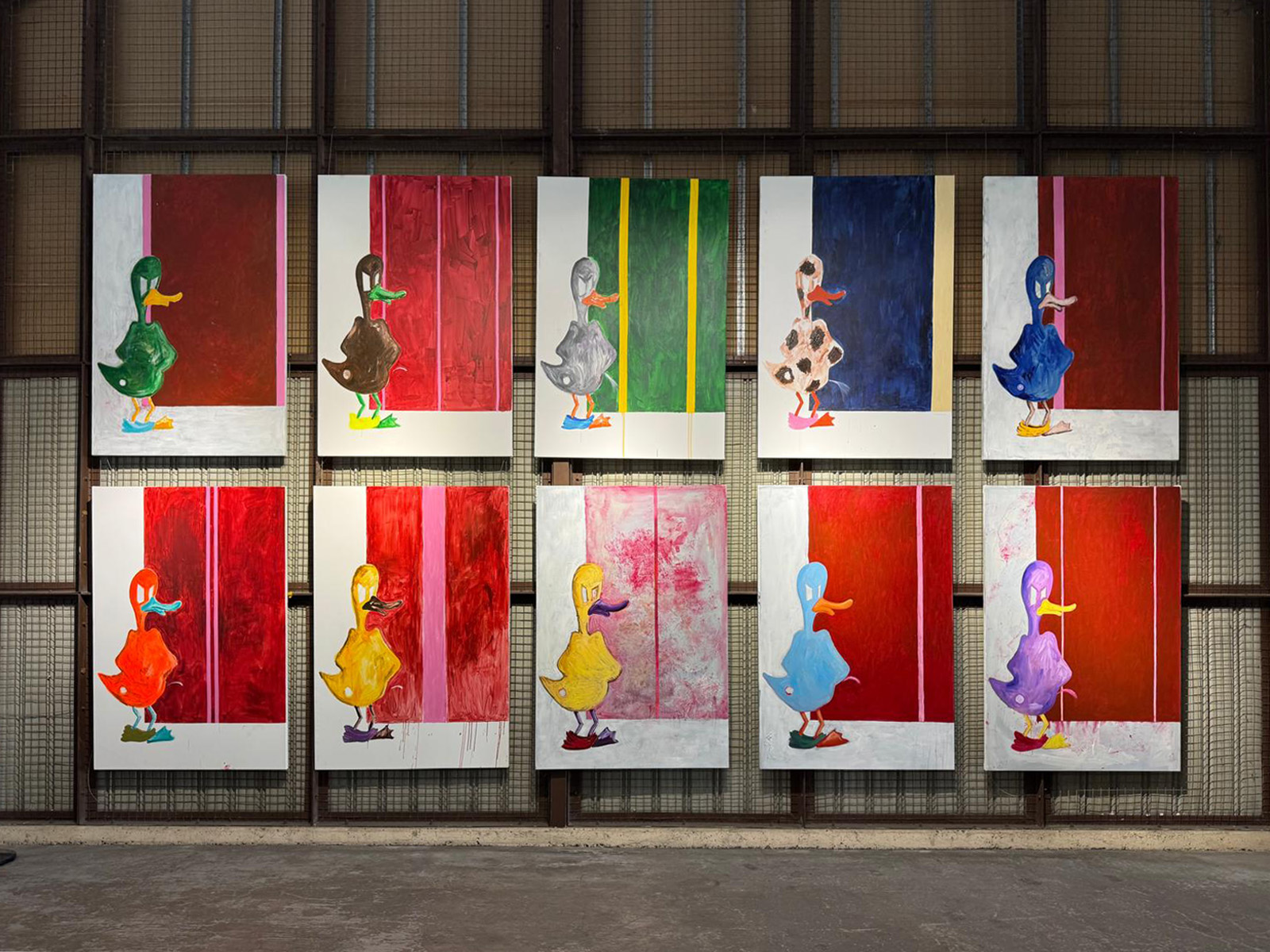
Manuel Ocampo (b. 1965 Philippines)
The Critic (from The Worst Slave Is The One Who Defends The Master)
2025
182 × 122 cm (each)
Oil on canvas
This series, The Critic (from The Worst Slave Is The One Who Defends The Master), is a confrontation. It offers a physical and philosophical interrogation of Western abstract art, particularly the sublime and monumental space claimed by High Modernist painting.
The central figure, a duck, appears as a migrant protagonist. Its upright posture and direct gaze invite an uneasy dialogue with the viewer. With its back turned, it presents a circular white opening that becomes the focal point of action and critique. From this point, a continuous stream is released onto fields of color that reference Modernism’s pursuit of the sublime, including its iconic “zips” and spatial divisions.
The variations in the paintings-single bands, paired forms, and shifting widths-function both as homage and
critique. They reflect the formal language of a specific historical moment while questioning its authority and
seriousness. The duck’s action transforms the abstract idea of “void” into something physical, fluid, and transient,
replacing metaphysical silence with a direct, embodied presence.
This gesture reflects the artist’s experience of migration: existing both inside and outside dominant cultural systems.
Like the migratory duck, the work moves between worlds, marking space through difference rather than conformity.
Inspired by encounters with non-human agency and chance, the series also embraces accident and disruption as
creative forces. Ultimately, The Critic questions who defines artistic space and value, and whether the ideals of
modernism can withstand the realities of lived, moving bodies and shifting identities.
Russ Ligtas
Born in 1985, Cebu, Philippines

Russ Ligtas (b. 1985 Philippines)
The Last Hapi
2025 Video installation, Running time: 90 minutes
Dimensions variable
Russ Ligtas’ The Last Hapi is an exploration of identity, memory, and
myth, framed as both a ritual and a self-portrait. Drawing from his
experience as a Filipino navigating diaspora, Ligtas weaves together
fragments of history, personal narrative, and cultural imagination to
question what “Filipino-ness” might mean today.
The work unfolds as a hybrid: a film that is also ritual, a performance that
becomes an installation. At its center is stillness-an insistence on breath
and silence in a world crowded with noise. The presence of a seated
figure within the space, watching alongside the audience, transforms
viewing into an act of reflection and mirroring.
By reference 1972, the year Martial Law was declared in the Philippines,
the piece gestures toward historical trauma while refusing to fix meaning.
The Hapi’s disappearance may serve as metaphor, allegory, or simply
myth. In this way, Ligtas leaves room for multiple readings-academic,
political, or personal.
The installation space, envisioned as either a dark cinematic environment
or an intimate living room, invites audiences into a porous bubble of
contemplation. Here, Ligtas offers not answers, but a mirror: a chance to
see ourselves in contradiction, and perhaps to find grace in the reflection.
Dominic Mangila
Born in 1978, Manila, Philippines
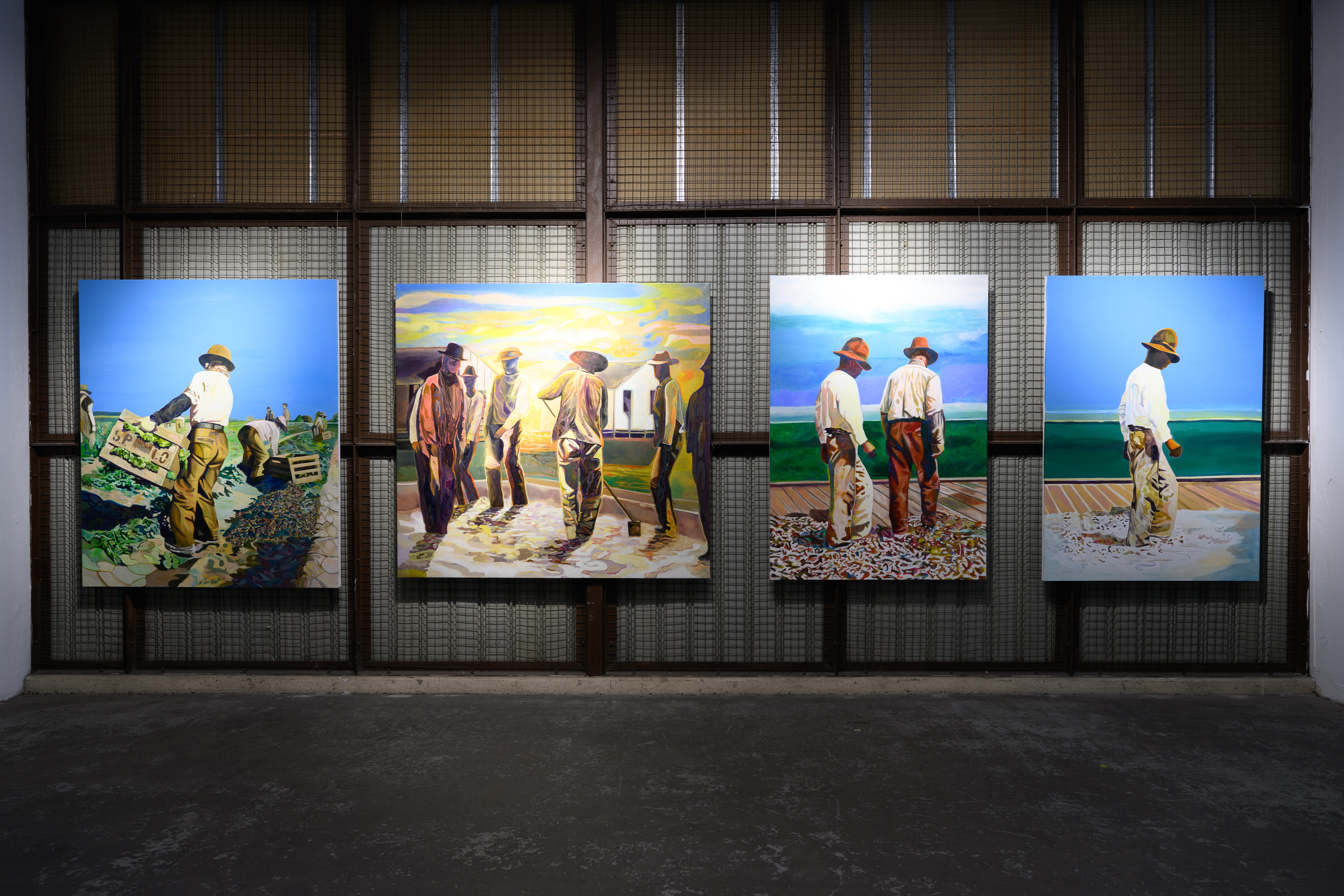
Manongs of Pajaro Valley and Louisiana Series
2026
This exhibition presents recent paintings by Dominic Mangila that reflect on the history of Filipino migrant workers who arrived in the United States in the early 20th century, commonly known as the Manong Generation. These workers were instrumental in shaping agricultural and maritime industries across California’s Pajaro Valley, Hawaii, and Louisiana.
Mangila’s paintings draw from historical narratives and archival research, including materials related to the International Hotel, a significant cultural site for Filipino and Asian American communities. Some references are drawn from Watsonville Is In the Hearts (WIITH), a community-based research initiative at the University of California, Santa Cruz.
Through a balance of figuration and abstraction, Mangila explores memory, labor, and presence. His painterly approach emphasizes gesture and surface, treating the brushstroke as both a physical and reflective act. The works invite viewers to consider how histories of migration and work continue to shape collective memory through contemporary painting.
Eisa Jocson
Born in 1986, Manila, Philippines
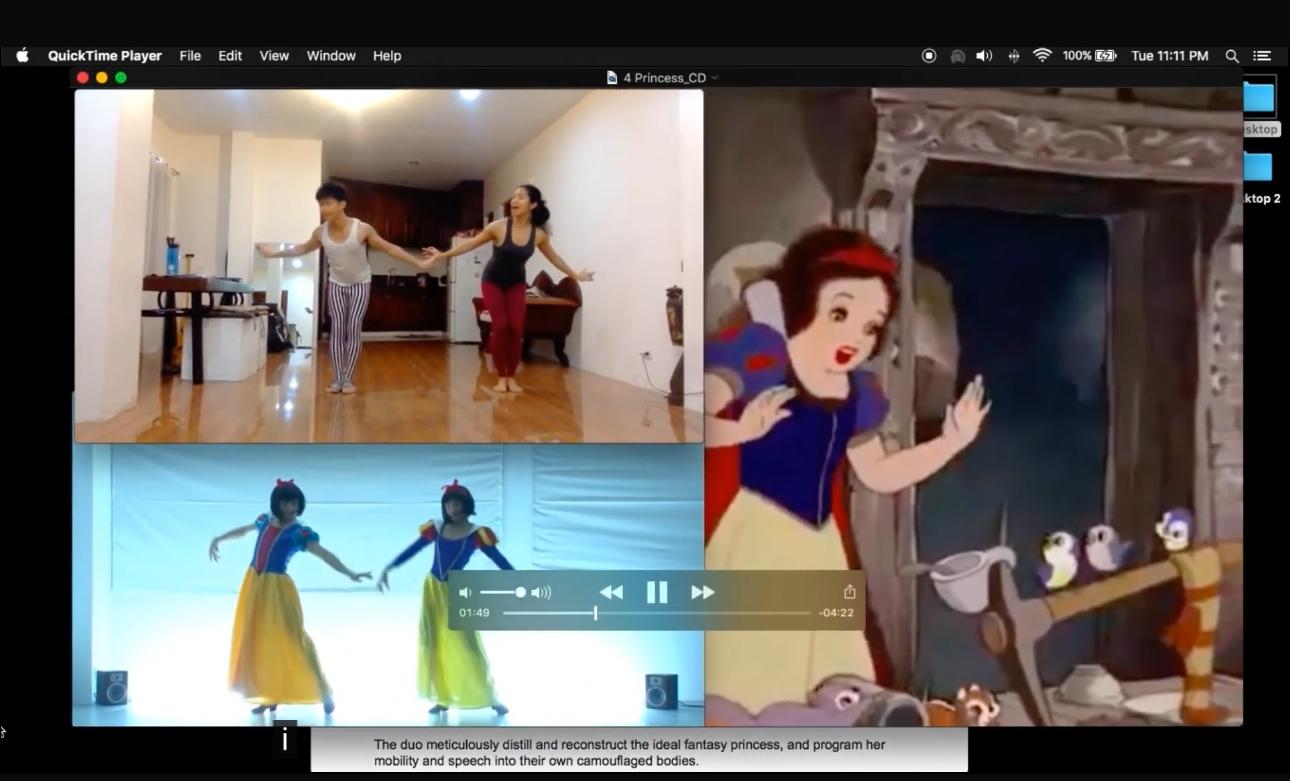
Corponomy Online
2022
Video
19 mins 42 sec
Exhibited (video work)
Connecting Bodies: Asian Women Artists, 2025, the National Museum of Modern and Contemporary Art Seoul Korea
Corponomy Online (2022), based on Corponomy: A Performance Lecture, which premiered in 2017, was conceived as an online video lecture during the pandemic. The work reveals the layered processes involved in each role transformation. Drawing from the artist’s personal archive of movement research and training-including documentation of mentor-student transmissions-Eisa Jocson shares the narratives and production of the multiple bodies that inhabit her artistic practice.
The video lecture investigates the politics of pole dancing, macho dancing, Filipino hostess culture in Japan, and Filipino entertainers at Hong Kong Disneyland. It is further expanded with later works, including The Filipino Superwoman Band (2019) and Manila Zoo (2021).
Leeroy New
Born in 1986, General Santos City, Philippines
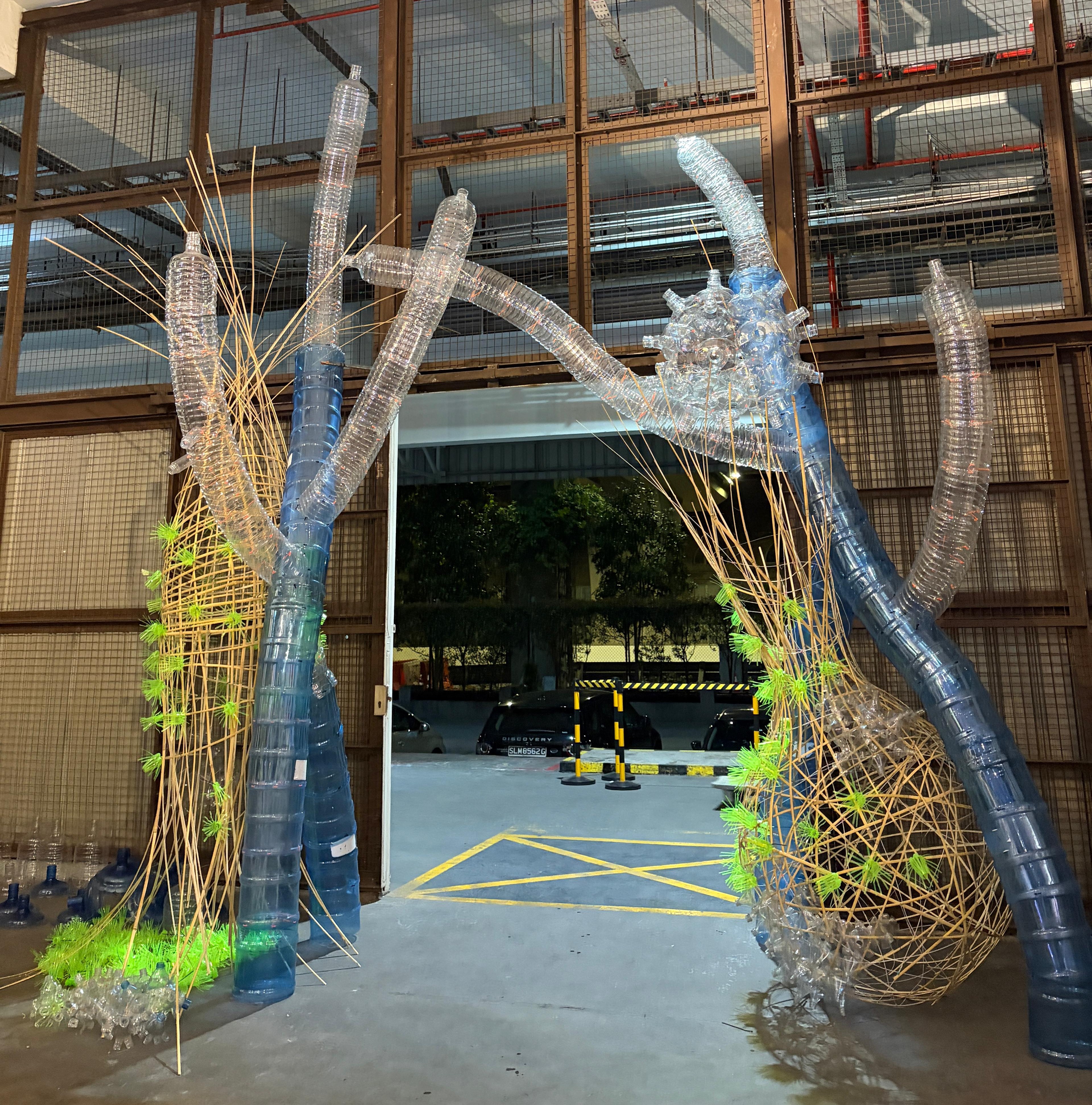
Leeroy New (b. 1986, Philippines)
Bird Nests, 2026
Bamboo, recycled plastic and found objects assembled Size variable
Leeroy New’s bird nest-inspired installation sculptures
are notable for transforming everyday discarded materials
into complex, biomorphic forms that evoke the creative
ingenuity of avian nest building, while addressing
environmental and social themes. These works often
feature organic, swirl-like structures made from recycled
plastics, electrical tubing, and hardware sourced objects,
combining art, social commentary, and ecological
consciousness.
Leeroy New reimagines the methodologies of birds in
collecting nesting materials by foraging and assembling
local, found objects such as plastics, irrigation hoses, and
cable ties into large-scale installations. Like birds who
use leaves, bark, and fibers, New draws parallels
between natural and human-made materials-his
sculptures often become “time capsules” containing both
cultural and environmental narratives. The forms echo
nests and root systems, referencing the Balete tree in
Southeast Asia, and invoke themes of resourcefulness
often found in Filipino communities who repurpose
leftovers into decorative objects.
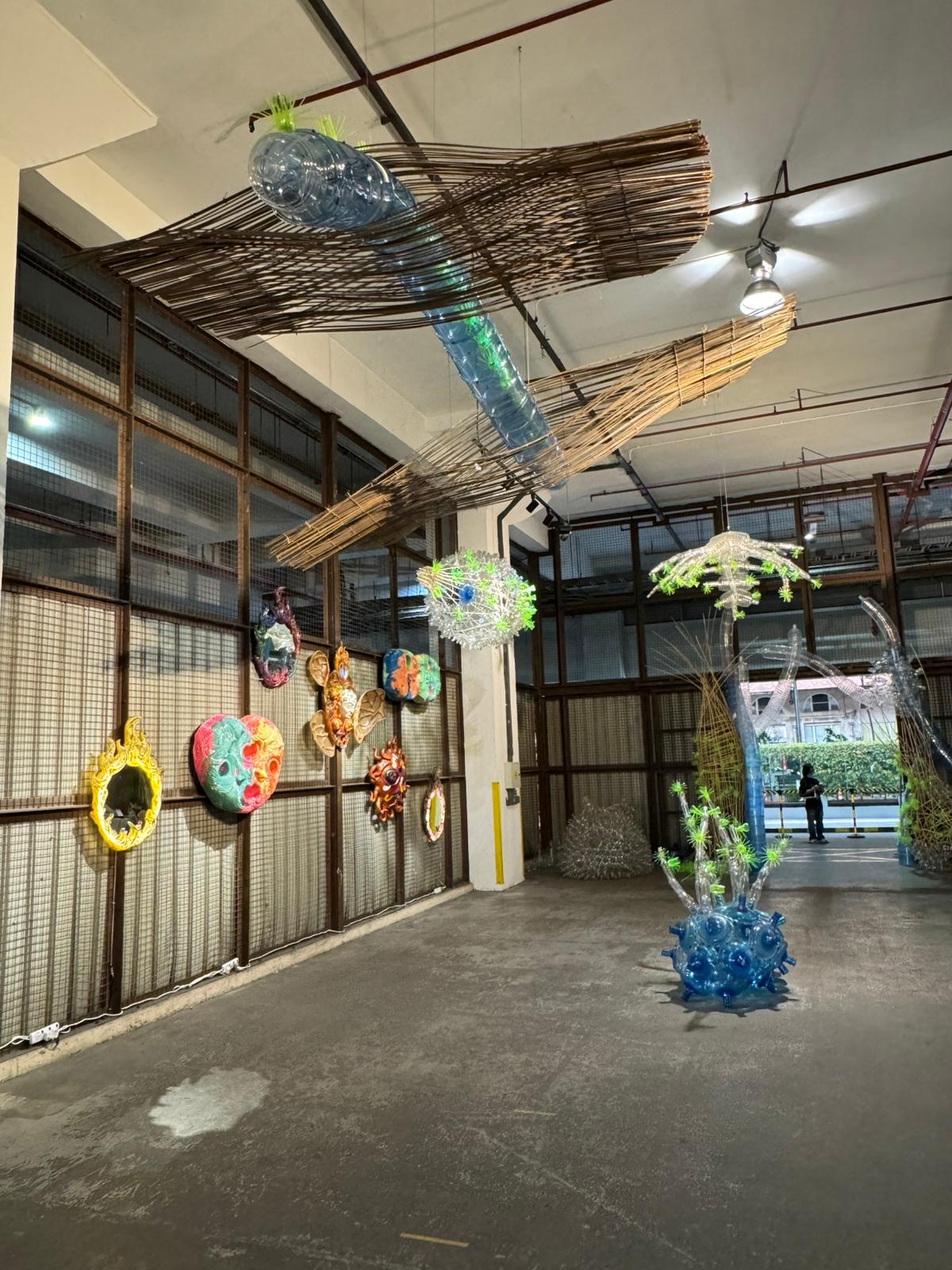
Leeroy New (b. 1986, Philippines)
Flotilla, 2026
Bamboo, water containers, PET bottles, twine, bicycle
wheel frames, ribbons, other found objects Size variable
Leeroy New presents a flotilla of boats made from recycled plastic. Floating above viewers, they speak to the nature of the Philippines as a country made up of many islands, in which water has a central place in everyday life. In recent history, the waters and oceans around the Philippines provided the backdrop for conflicts during the Second World War. As such, these boats speak to the contested nature of our oceans, waterways, and the political nature of water in our lives, while for New, plastic as a material is symbolic of Filipino adaptability to change.

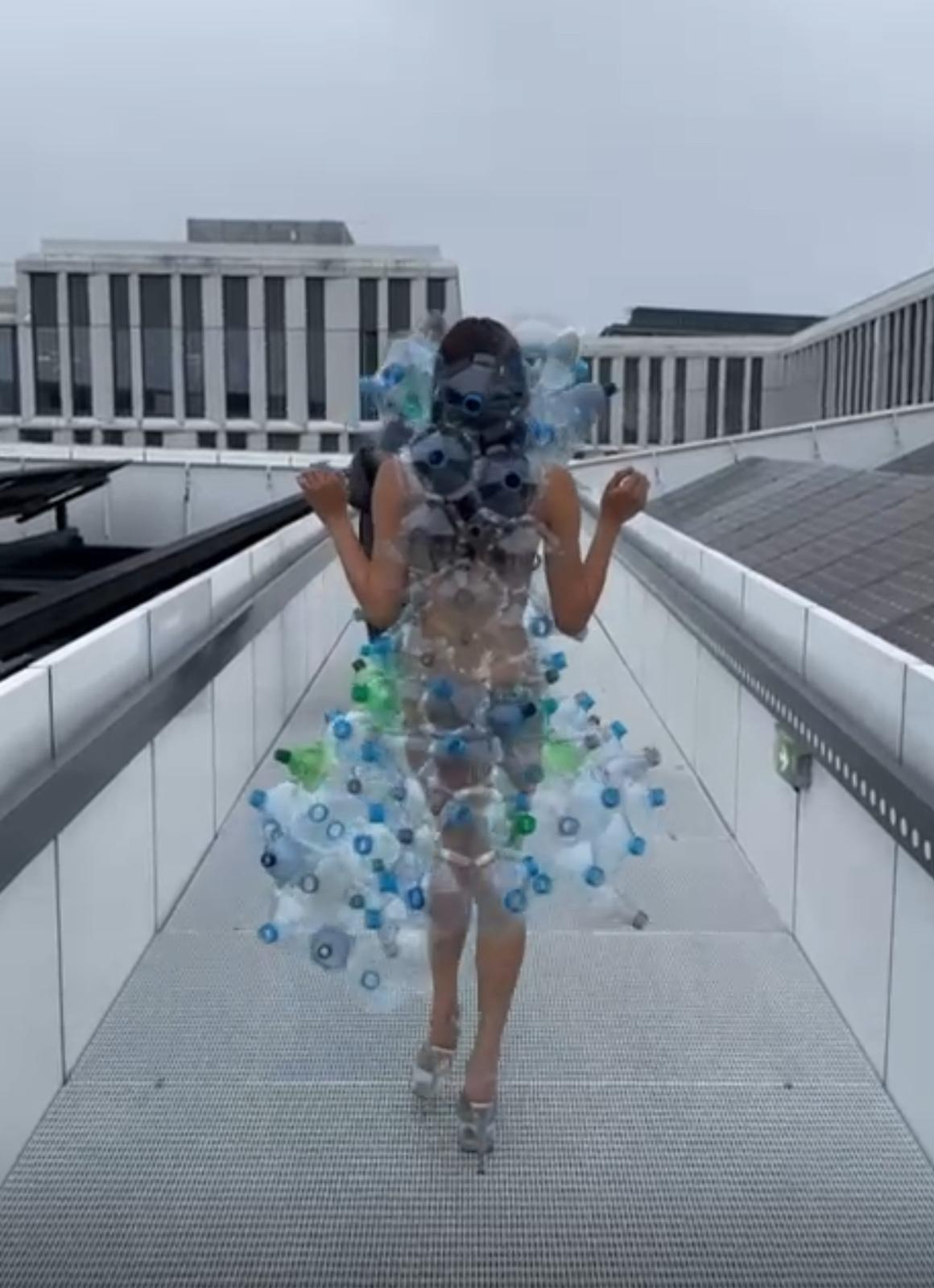
Leeroy New (b. 1986, Philippines)
Aliens of Manila, 2022
Leeroy New collaborates with local performance artists f rom various countries, transforming massive discards of the community into set pieces and even wearable sculptures, culminating in a cyber-site series called Aliens of Manila, which documents alien characters inhabiting Manila’s often harsh yet colorful streets.